This trip was originally planned — for the third time — to climb the Matterhorn and the Eiger, two iconic giants of the Alps. But as the saying goes, “Man plans and God laughs.†Life had other ideas, and instead of those classic peaks, we embarked on a “Plan B†that turned out to be beyond all expectations.The reason -bad weather with winds and snow in Switzerland.
Over six days, we climbed in four spectacular regions scattered across northern Italy:
The Grignetta near Lake Como
The remote Pontese valley in Gran Paradiso National Park
The classic climbing hub of Arco near Lake Garda
The rugged Brenta Dolomites around San Lorenzo and Rifugio AgostiniDriving and hiking between these spots meant covering roughly 900-1000* kilometers* of alpine terrain, from the foothills above Lake Como to the soaring limestone towers of the Dolomites. Each region had its own unique character — from the limestone spires and turquoise lakes to the rugged granite walls and wild mountain meadows.
Grignetta Mountain and Rifugio Carlo Porta
Our journey began in the Lake Como area, where we tackled the famous Grignetta Mountain, close to Lecco . The night was spent at Rifugio Carlo Porta, nestled comfortably in the mountains. The climb offered challenging granite routes and unforgettable alpine views — a perfect warm-up for what was to come.
Pontese and Rifugio Pontese
Next, we headed north to the remote Pontese valley in Gran Paradiso National Park.We spent the night in the town of Rivarolo Canavese. The Pontese valley feels untouched — granite walls rising steeply from alpine meadows, streams tumbling over boulders, and only the occasional ring of cowbells breaking the silence.
Getting there was part of the adventure: a road closure several kilometers from the usual trailhead meant a long, steady hike up the valley with our packs. Winding past waterfalls and under sheer granite faces, we finally arrived at Rifugio Pontese — a classic alpine hut with sleeping quarters for twenty-eight in three-tier bunk beds and a simple hole-in-the-ground toilet.
Climbing from Pontese means alpine starts — ours came at 4:30 a.m. The hut was dark except for the glow of headlamps and the quiet clink of carabiners as we readied for the day.
Our first day’s climb wasn’t Punta Mara itself, but a nearby dolomite tower close to the hut. The ascent was technical , but the summit rewarded us with epic views of a turquoise lake below, sparkling like a jewel nestled in deep green pine forests, sunlight dancing on its surface.
The next day, we tackled Punta Mara, a peak that quietly dares you to underestimate it. The climb featured solid granite, loose flakes, and airy traverses, with panoramic views of jagged ridgelines and alpine lakes. The descent was long and challenging, but our spirits remained high.
That night, we crossed to the other side of Italy and stayed in the beautiful city of Trento, enjoying the soft evening light warming Renaissance palaces and the scent of flowers replacing alpine pines.
Arco and Via Claudia 22
From Trento, we drove to Arco, a historic climbing hub nestled between limestone cliffs and olive groves. The town feels built for climbers — with gear shops on every corner and crags rising right from the streets.
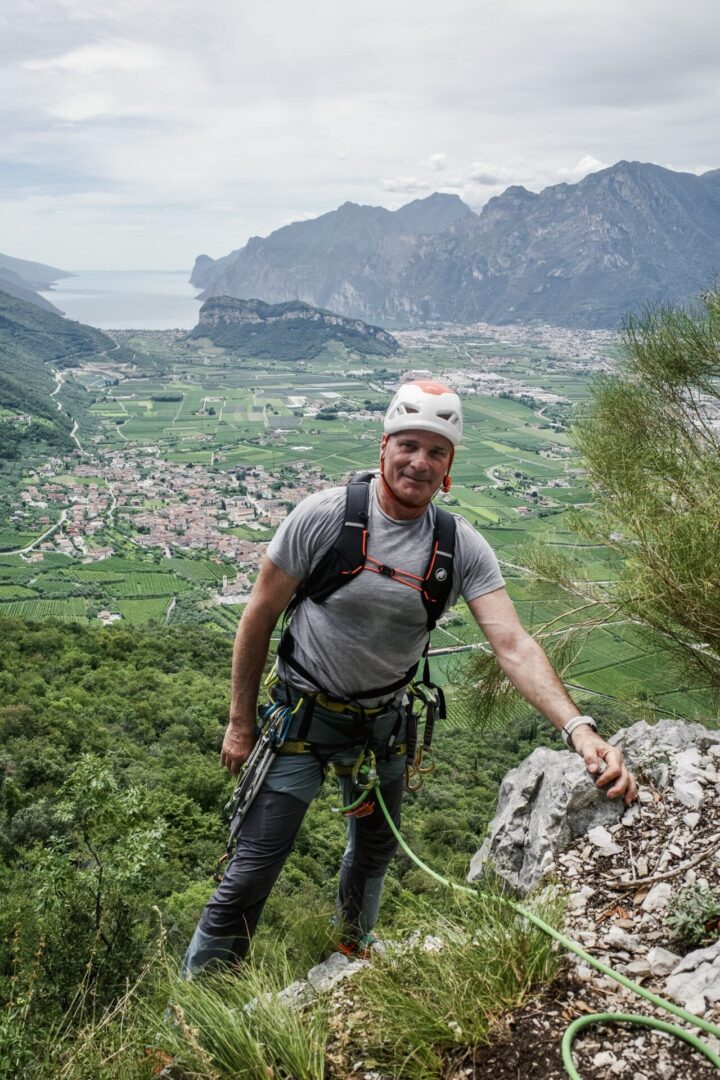
Our climb was Via Claudia 22 on Parete di Pezol, a route with vertical stretches, delicate traverses, and exposure that kept us focused. Although graded higher than Punta Mara, the warm limestone and well-shaped holds made the climb flow beautifully.
Halfway up, views of Lake Garda opened below — its shimmering blues and silvers merging with the sky, sailboats cutting white lines across its surface. The late afternoon light turned the lake into a mirror, glowing gold against distant mountains.
Later on we stopped at a local winery for wine tasting .
San Lorenzo and the Brenta Dolomites
After Arco, we moved east to the Brenta Dolomites, switching from Mediterranean warmth to jagged limestone spires. Our base was San Lorenzo, a charming town nestled amid valleys and peaks. Our hotel felt like a time capsule from the 1980s — floral wallpaper, heavy wood furniture, and a retro vibe. Surrounded by mostly retirees, we definitely felt young, a reminder of all the ways to enjoy these mountains.
Rifugio Cacciatori and Rifugio Agostini
From San Lorenzo, we took two rugged Land Rover Defenders for a bumpy ride to Rifugio Cacciatori. The drive was wild — rocky dirt roads, dense forests, and steep trails.
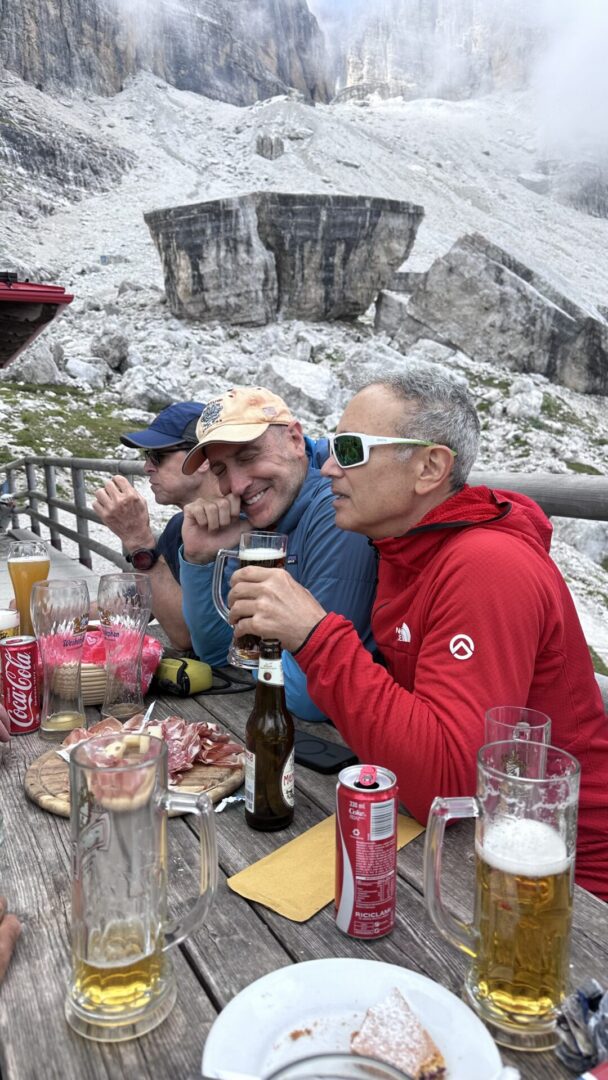
Arriving at Rifugio Cacciatori felt like stepping into a different world, but our journey wasn’t over. We huffed and puffed as we hiked straight up a steep trail to Rifugio Agostini, surrounded by sheer cliffs and wildflower meadows.
Torre di Val di Ambiez
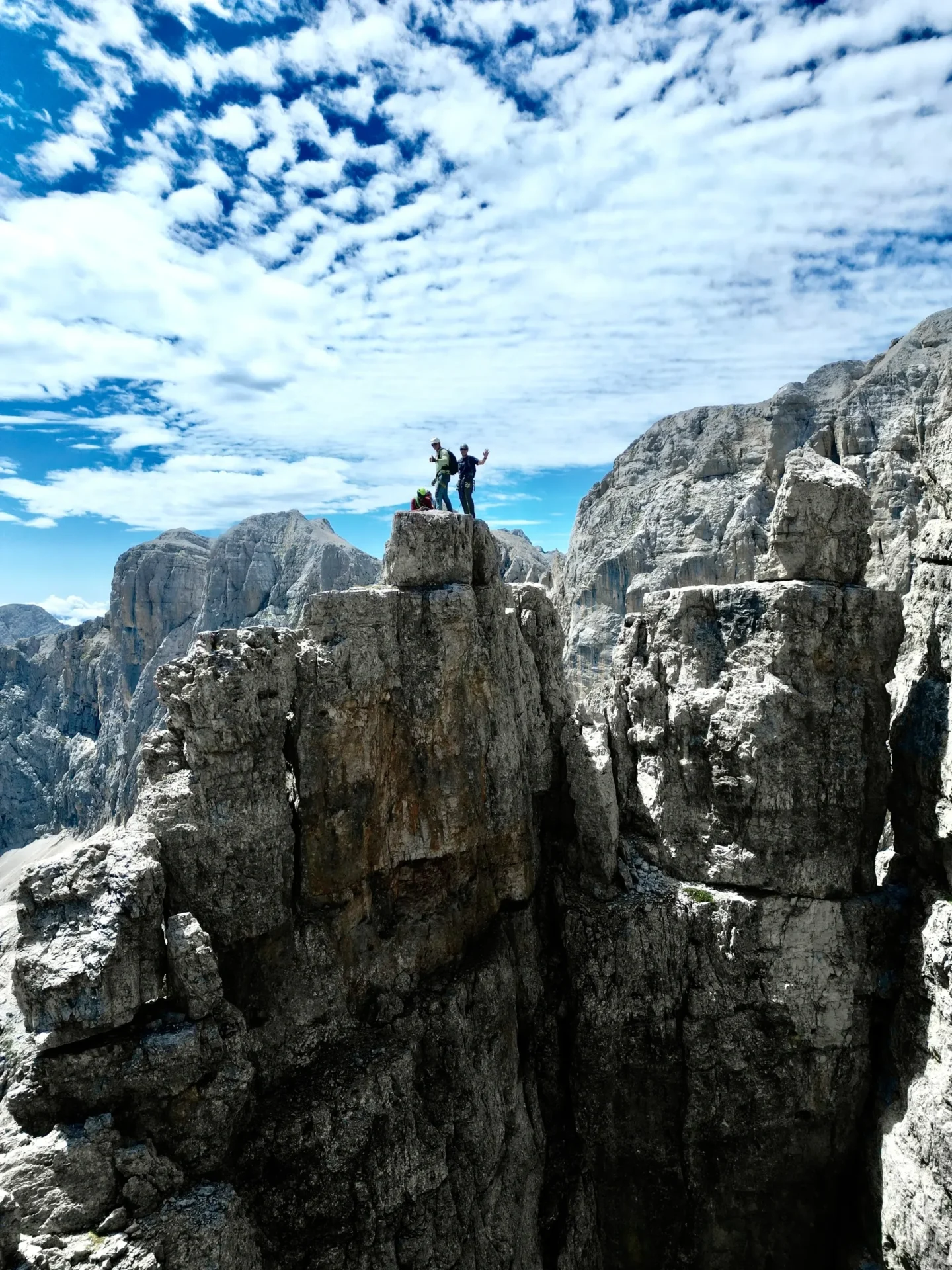
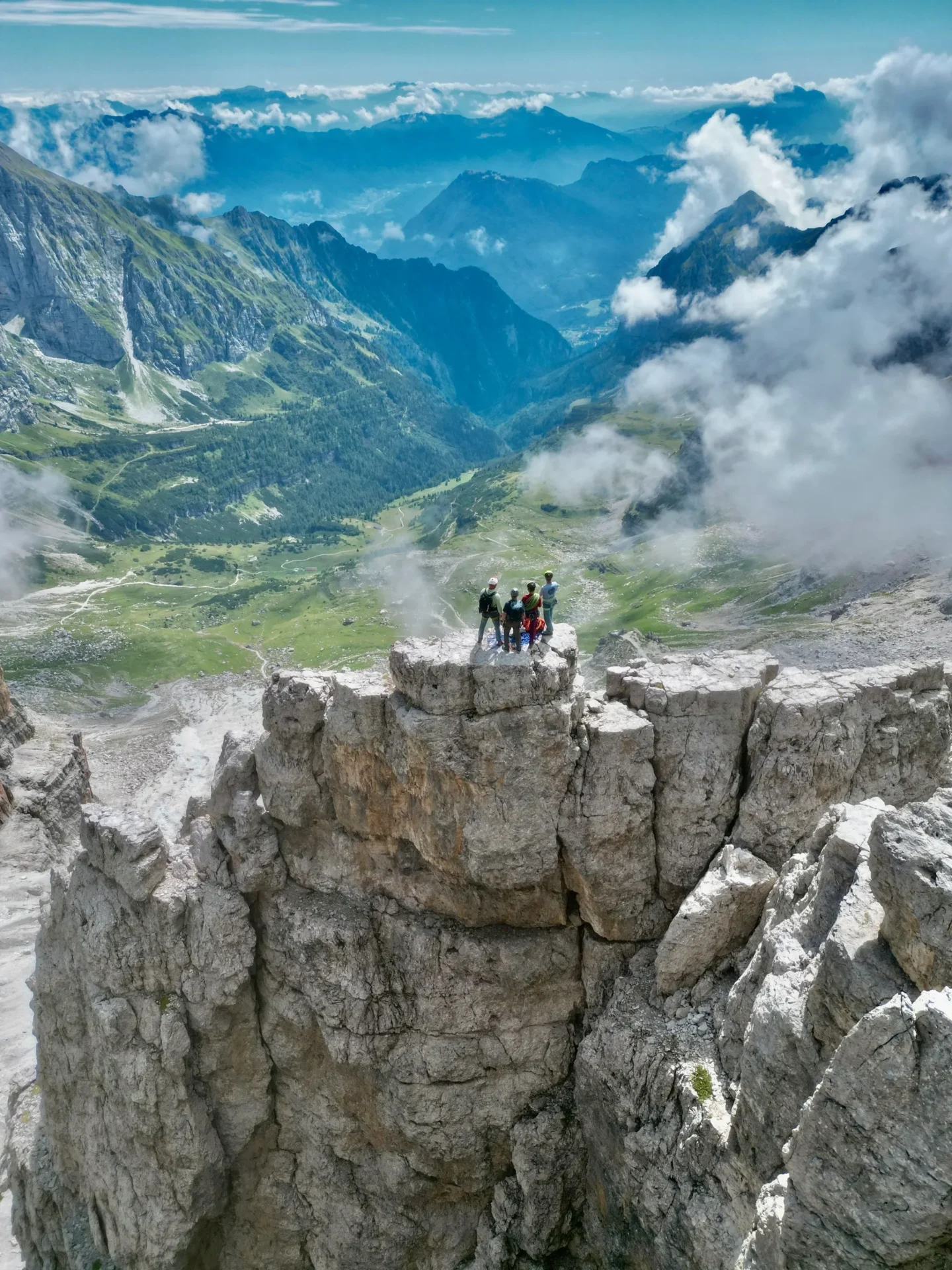
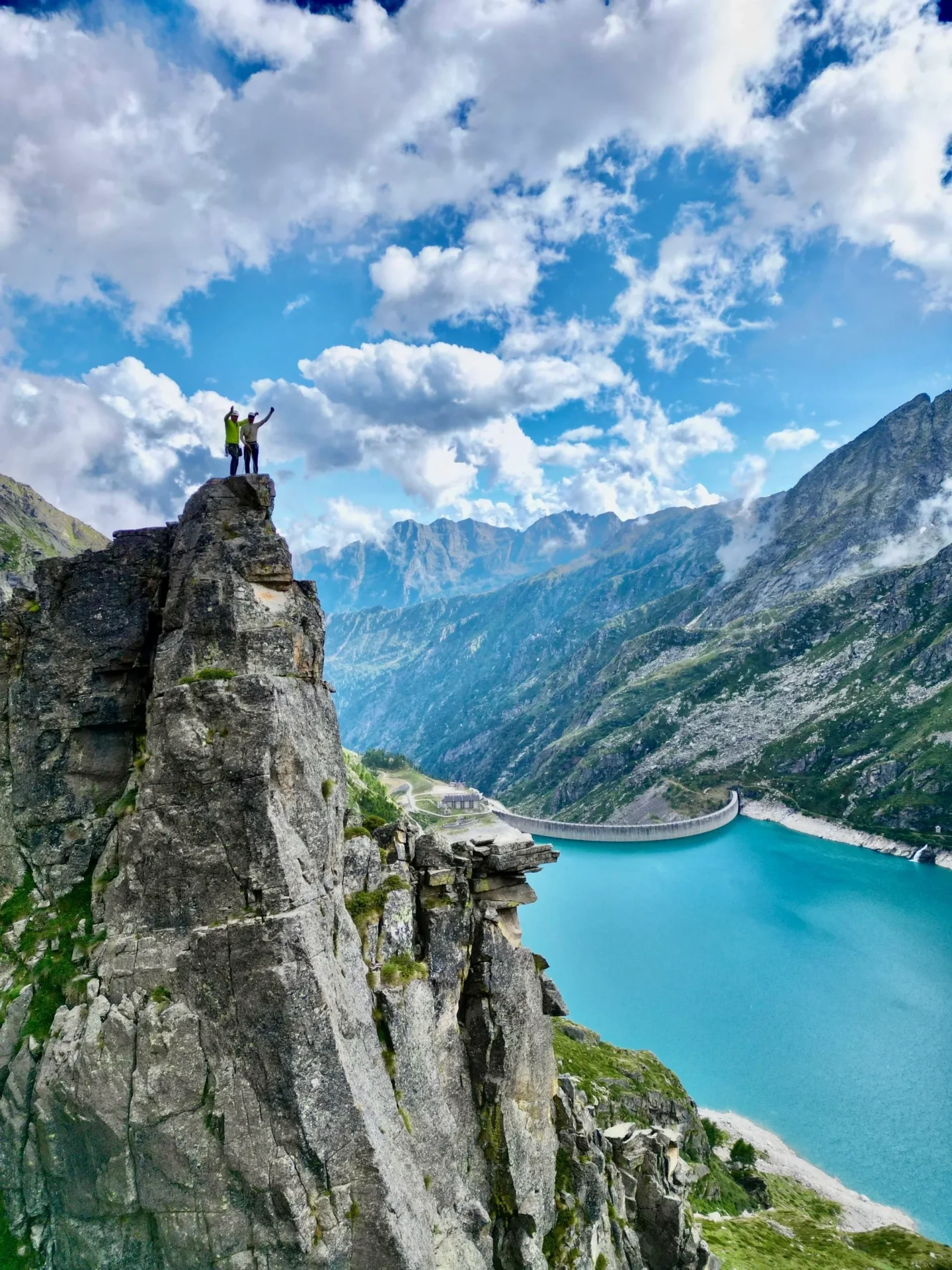
After a quick coffee at Rifugio Agostini, we tackled Torre di Val di Ambiez. The dolomite tower’s pale, textured walls glowed softly in the alpine light. The climb required focus and steady movement, and when we stood on the tiny summit platform, the endless panoramas of peaks and valleys rewarded us.
The descent featured huge rappels that tested our skills, suspended over vast drops with the mountain sprawling beneath us. Luckily, Alessandro, our guida, had a drone capturing breathtaking aerial footage — images that perfectly showcased the scale and beauty of the Dolomites.
Canyoning in Rio Nero
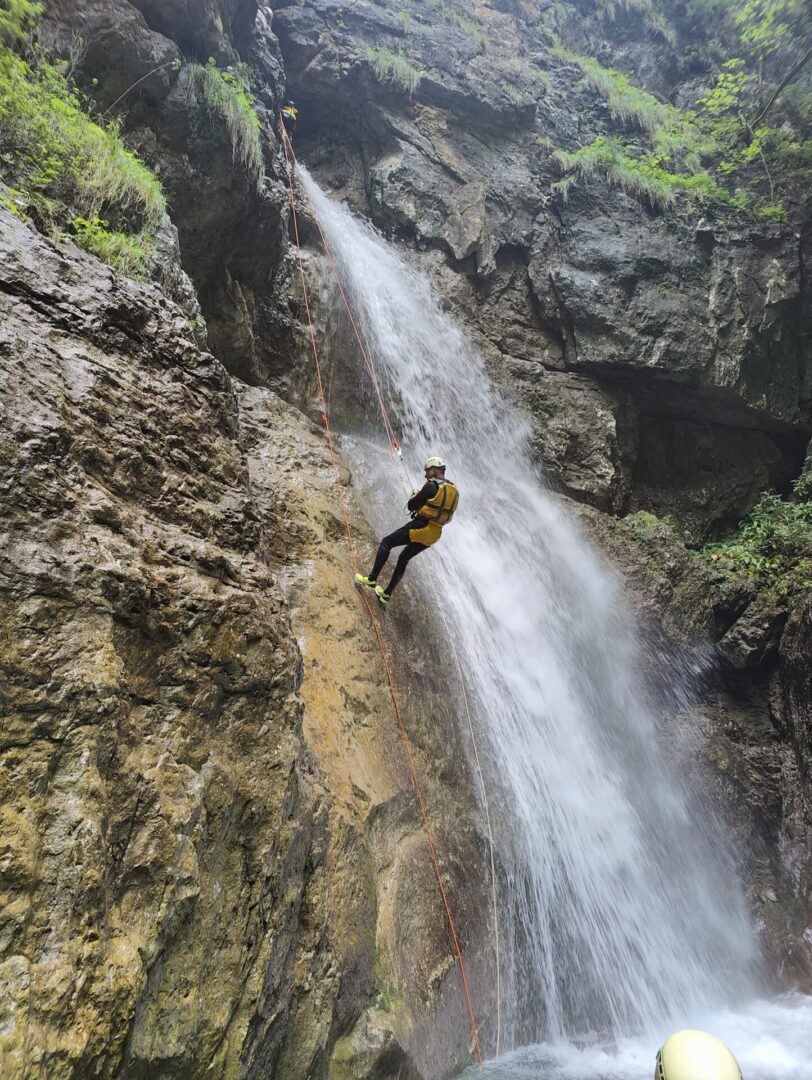
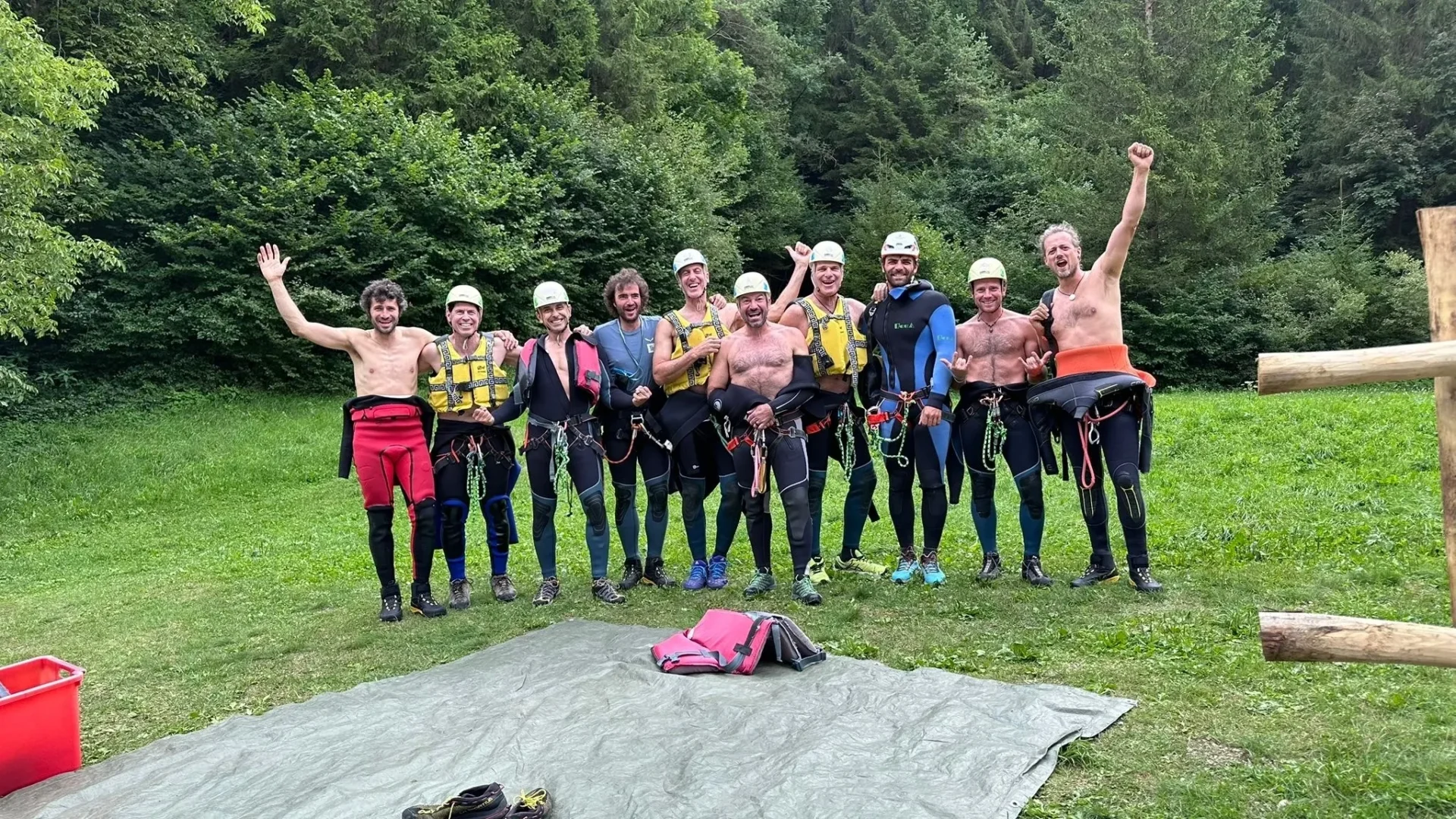
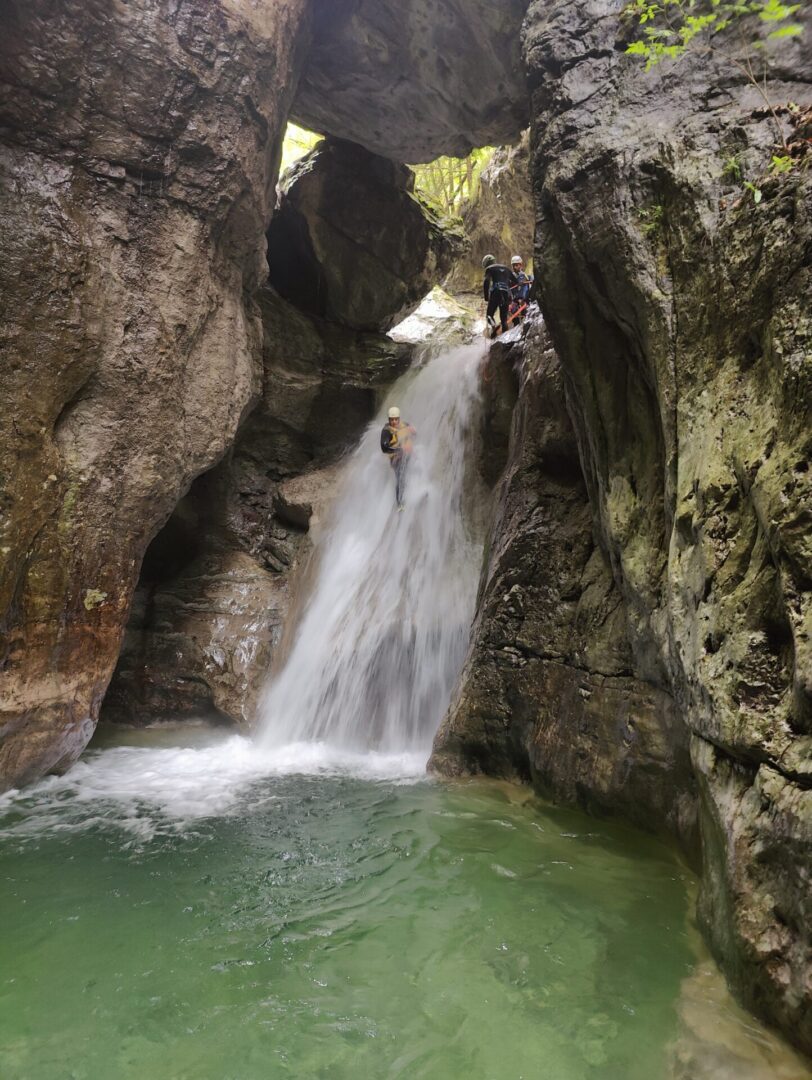
Our last day brought the most dangerous challenge — canyoning in Rio Nero. We rappelled down waterfalls, jumped into icy pools, and navigated slippery rocks, adrenaline surging with every leap. The roaring river echoed around us as we trusted our guides and each other through the wild water.
Culinary Highlights
Throughout the trip, our guides found amazing restaurants frequented mostly by Italians, perched on mountainsides with breathtaking views of lakes and valleys. These authentic spots served homemade pasta, fresh mountain cheeses, and local wines, adding a delicious cultural layer to our adventure.
Reflections
This “Plan B†trip, spanning about 900-1000 kilometers of alpine terrain, was a powerful reminder that sometimes the best adventures come from unexpected changes. The variety of climbing grades (UIAA IV to VI), terrain, and length challenged us physically and mentally while rewarding us with unforgettable experiences and breathtaking scenery.
Lessons Learned
Flexibility is Key: Embrace the unexpected — it often leads to the richest adventures.
The Power of Good Guides: Trusted guides open doors to hidden gems and keep you safe.
Pace Yourself: Balance physical exertion with restful moments to stay strong.
Know Your Grades and Routes: Preparing for technical difficulty and length is crucial.
Respect Local Culture and Nature: Understanding the places you visit deepens the experience.
Enjoy the Entire Journey: Every step — hikes, rappels, early starts — is part of the story.Climbing Summary
ClimbLocationGrade (UIAA)Length (meters)NotesGrignetta Mountain TowerLake Como areaIV~200Technical granite climbingTower near Rifugio PonteseGran Paradiso regionIV-V~250Dolomite, stunning lake viewsPunta MaraPontese valleyIV-V~300Exposure and mixed terrainVia Claudia 22Parete di Pezol, ArcoV-VI~350Limestone, flowing movesTorre di Val di Ambiez-Via ArmaniBrenta DolomitesIV-V+~400Dolomite, huge rappelsCanyoning in Rio NeroNear Brenta DolomitesN/AN/AWater descent, rappelling, jumps
Updated Road Trip Breakdown
Route SegmentApprox. Distance (km)Lake Como → Pontese~248 km*Pontese → Trento~410 km* (estimated)Trento → Arco~36 kmArco → San Lorenzo~100 kmSan Lorenzo → Milan~302 km*Estimated Total Driving~1,096 km*
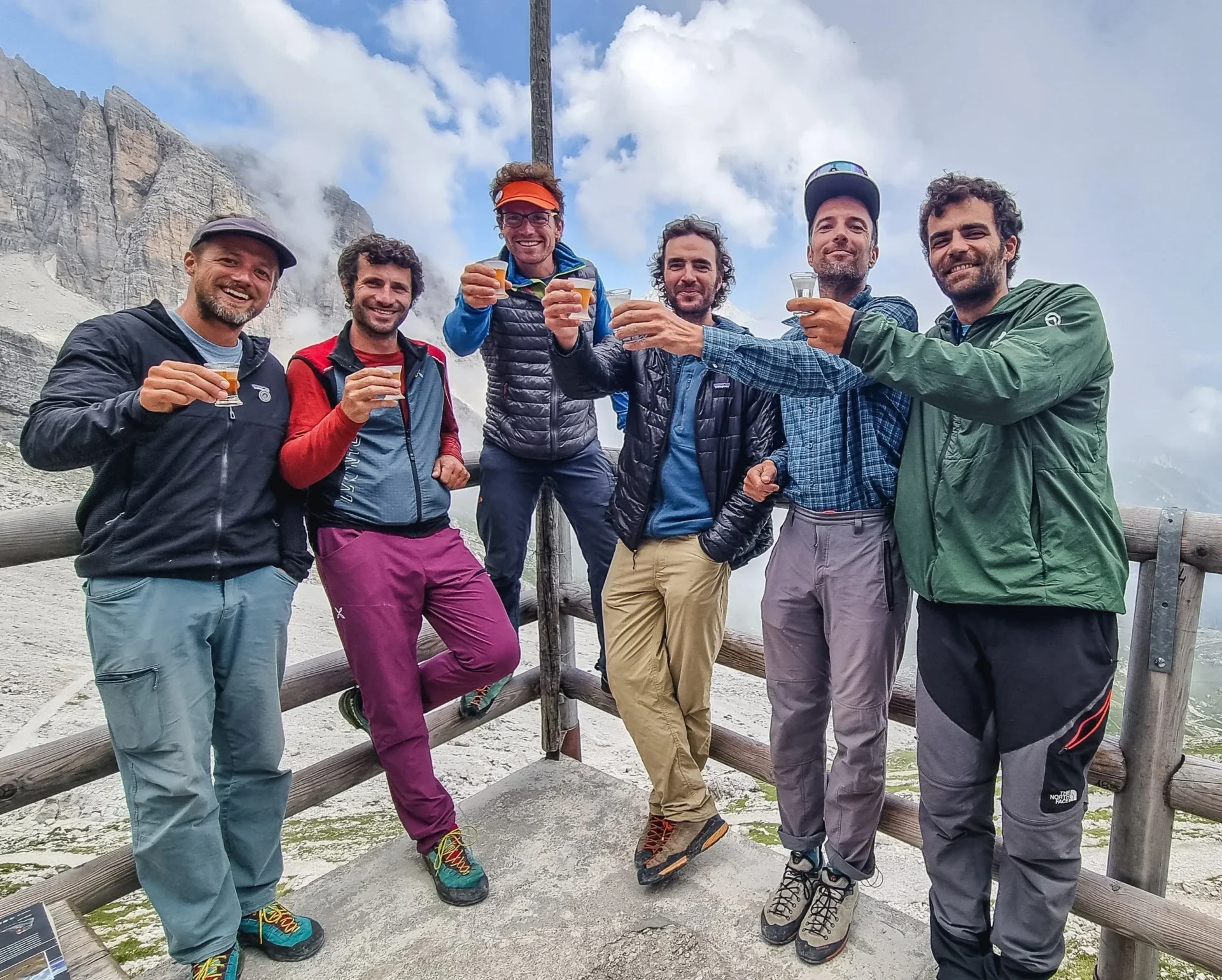
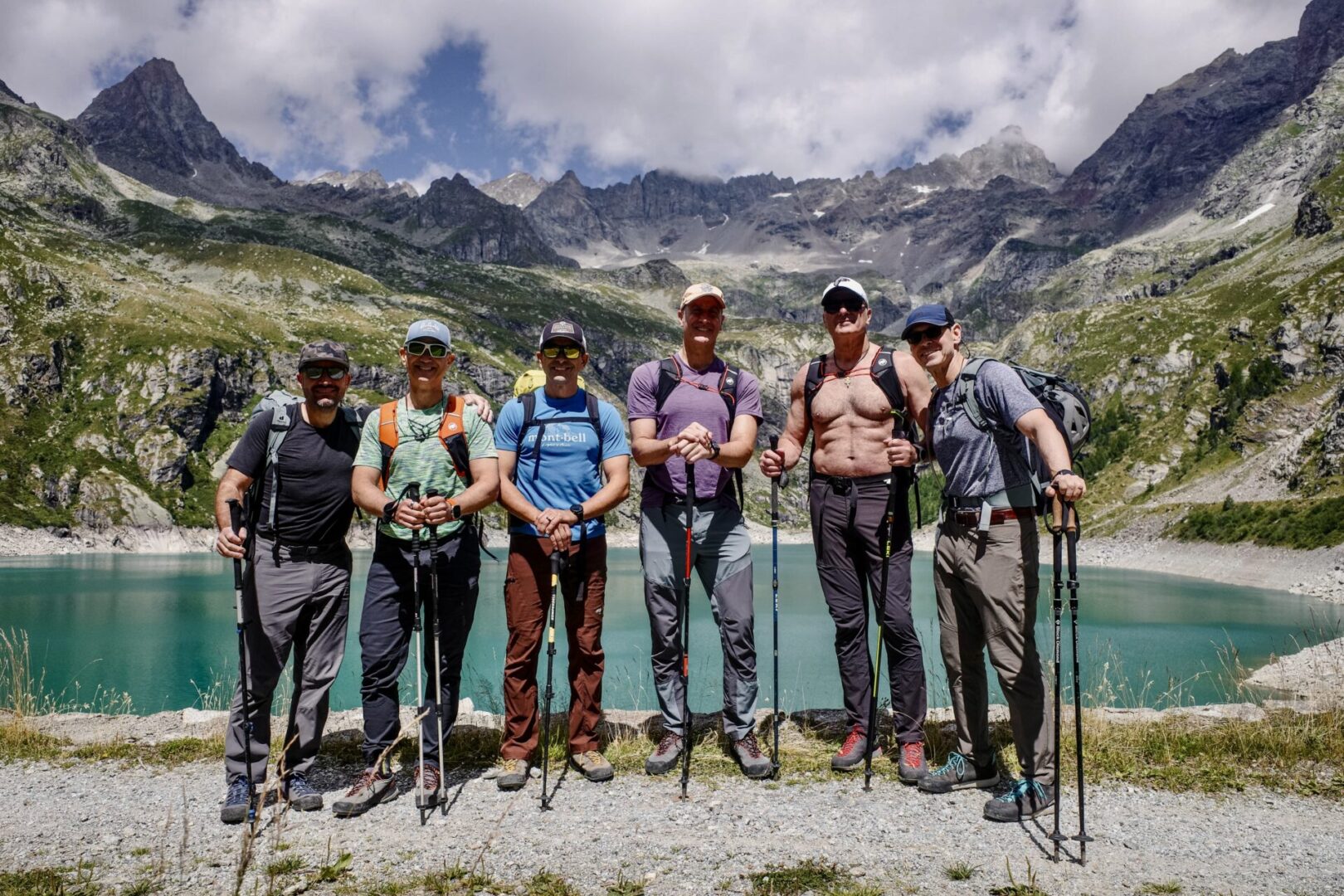
The team : Alon/Jeff/Joe/Jay/Dima/Garett
The guides: Albi/Alessandro/Andrea/Lucca/Federico/Marco
After six incredible days, we flew back to the US from Milan, hearts full of memories, muscles tired but spirits high, already dreaming of the next adventure.