2023 was for me “Annus Mirabilisâ€. I got to travel 3 times to East Asia – India/Kashmir, Thailand/Cambodia, and Nepal. I travelled as far south as Torres del Paine at the tip of South America and as far north as the Selkirk Mountains in Canada, went on 3 climbing trips all over the Alps, and also ventured to one of the most uninhabited places on earth – East Greenland.
But how did I end up in Nepal? It really was never on my list… but Albi, my Italian mountain guide for many years, had been asking me for the last 2 years to join him on a trip to the Everest Base Camp in the Himalayas (which means “snow abode†in Sanskrit).
I initially said that I couldn’t go, but he was persistent. So here I was on a plane flying to Doha and from there to Kathmandu. It was a trip that I really did not want to go on, yet a trip that I really wanted to go on.
How come? I really did not want to go again to a third-world country, being cold and uncomfortable with poor sanitation and food not really up to my taste. But on the other hand, I really wanted to see the one and only Everest.
It so happened that my departure date was October 7, a date that will forever live in infamy, the day Hamas invaded Israel and massacred 1,200 people. I was obviously in a lousy mood, but life goes on…
Jay joined me on this trip, and so did his friend Bob. The plan was to trek to the Everest Base Camp and then to climb Lobouche East, a 20,000+ peak close to Everest. I had to buy special snow climbing boots and a Jumar (a rope ascender). I also had to buy a very thick puffer jacket and had a whole list of clothing items required. Seven Summits, the Nepalese company that guided us, sent us a detailed list of medications we had to bring as well – so I traveled with a whole pharmacy: antibiotics, anti-nausea and anti-diarrhea meds, beta-blockers for palpitations, inhalers, Diamox for altitude, Procardia, Cialis, Decadron for High Altitude Pulmonary Edema and High Altitude Cerebral Edema, plus a first aid kit – just to name a few.
I had a sleeping bag for very low temps (15°F), a urine bottle (per company instructions), and a special XL duffle bag to fit all my gear. I also took with me salamis, Parmigiano, and Pecorino cheese blocks (all from Costco – so you can imagine the size), as well as chocolates, energy bars, gummies, gels, electrolyte packets, and last but not least – a bottle of Jim Beam Bourbon.
So from Doha in Qatar we took a 5 hour flight to Kathmandu , where we landed at 1:00 AM. The airport was very poorly organized .We were not informed that a visa is necessary , so it was hassle to get it. Finally we got out and greeted by a driver who took us to our “boutique†hotel . It was a 3 star one , basic but it was OK(ish ). After a few hours of sleep we met a representative of Seven Summits, who was late.
He apologized , and said that there was an avalanche in Tibet that killed 2 Americans and their Sherpas the day before, and he had to be on the phone.
We then toured the city. Kathmandu has been ravaged by an earthquake in 2015, but I could not see any signs of it. The buildings appear, however, to be very unstable overall; they appear old and run down. The roads are very hectic, crowded with lots of motorcycles and mopeds. It reminded me of India, but the streets were overall cleaner. The city is very polluted and full of smog. We visited Swayambhu, the “Monkey†Temple, a Buddhist temple on the top of a hill that overlooks the city, with many impressive Stupas. (A Stupa is a mound-like or hemispherical structure containing relics that is used as a place of meditation.) The nickname of the temple comes from the many monkeys that roam the place. They are considered holy.
We continued to the Durbar Square, the focal point of the city. It’s where the royal palace and various temples “Kathmandu – the Wooden Pavilion.â€
The royal palace entrance is guarded by the “Monkey God,†and his face was covered with a red cloak. Why? So it would not have to look at the Kama Sutra palace located in front of it. Another palace, the Kumari Ghar, is the place housing the “Living Goddess.” The locals believe that Shakti, the divine female energy, dwells in a virgin (who’s a girl before puberty). We saw the palace, but the Living Goddess was meditating when we visited. We could have come later to see her in person.
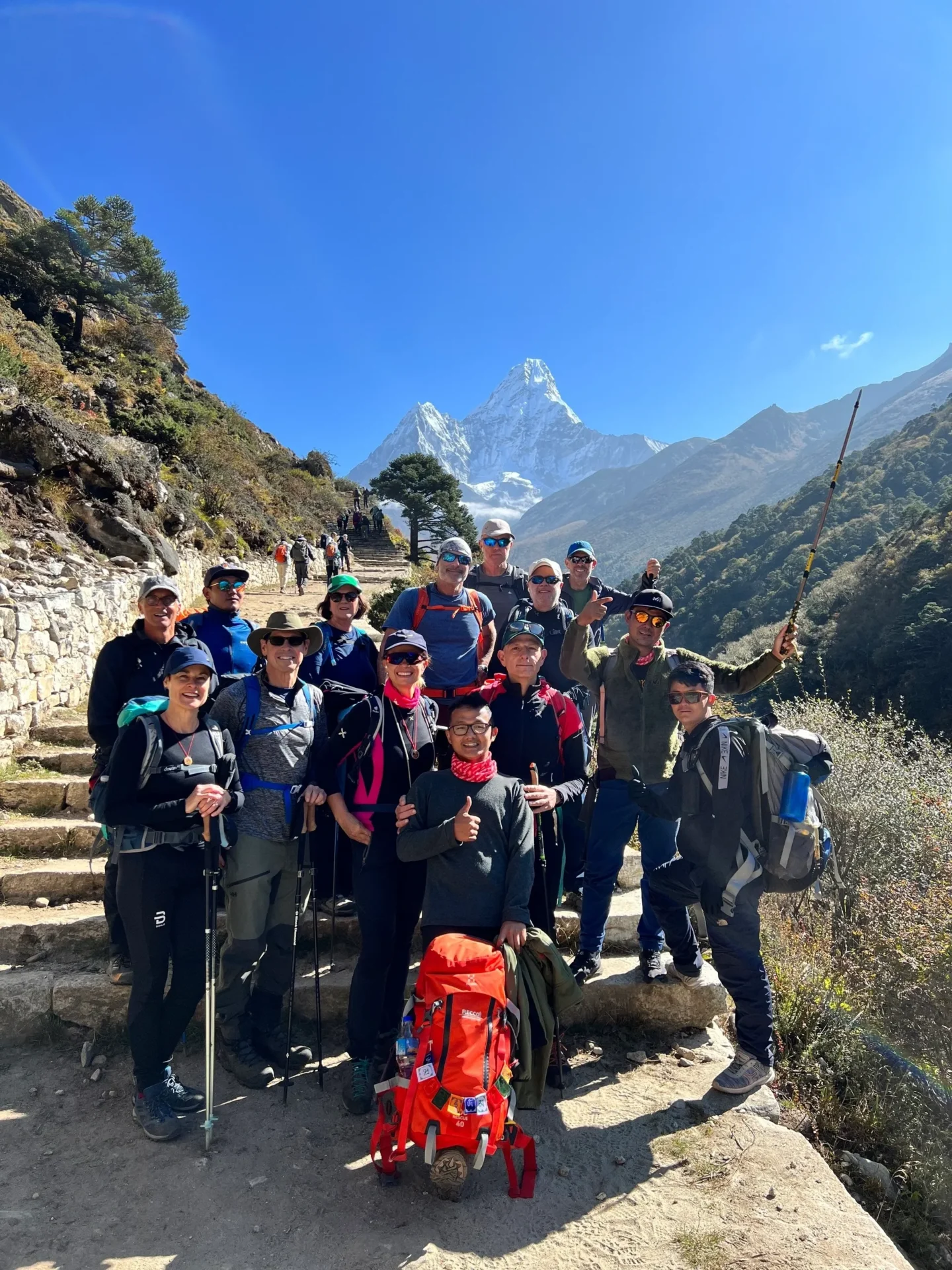
We learned that Nepal has 47 ethnic groups and numerous languages, and that about 80% are Hindi. Buddhism is very common, mainly in the area close to Tibet, and the Sherpas—an ethnic group—practice it. Later that evening, we met the rest of our group: 3 Italians (Giovanni, Michele, and Laura), 4 Canadians (Graham and Kathryn, Steve and Marcia), and Albi. We also met our main guide, Sangay, and his nephew Tangse, both Sherpa. Sangay is a very accomplished guide and climber and has summited Everest a few times.
While in Nepal, it is important to have zero expectations and lots of mental flexibility. Nothing goes according to plan. We were supposed to fly from Kathmandu to Lukla; however, we were told that due to repairs at the international airport, the flight would take off from Ramechap, which is 130 km away from our hotel—about a 5-hour drive by bus.
So we were offered to fly by helicopter from Kathmandu (paying extra, of course). After dinner, we were informed that due to poor weather, the heli had to fly out of Ramechap. So at 2 a.m., we boarded the bus and drove on a road with lots of hairpin bends above huge cliffs and voids, with no guardrails. The road is known to have had many accidents and fatalities. In one section, there were mirrors on the rocky face by the side of the road for about a kilometer—the driver told us that this was in memory of all the people who died in bus crashes, but not to worry, Japan gave money to improve this section of the road.
Finally, we made it to Ramechap, where we saw tons of people. It turns out that due to bad weather, there had been no flights to Lukla for many days, so many people wanted to take the helicopter. It was a complete and total mess, and this airport was very poorly equipped to handle so many travelers. After waiting until 5 p.m. and still not getting on a flight, we spent the night there. The next morning, we finally got on a flight. It was only the second day in Nepal for our pilot! Mid-flight, he found out that we had to divert to another airport due to weather.
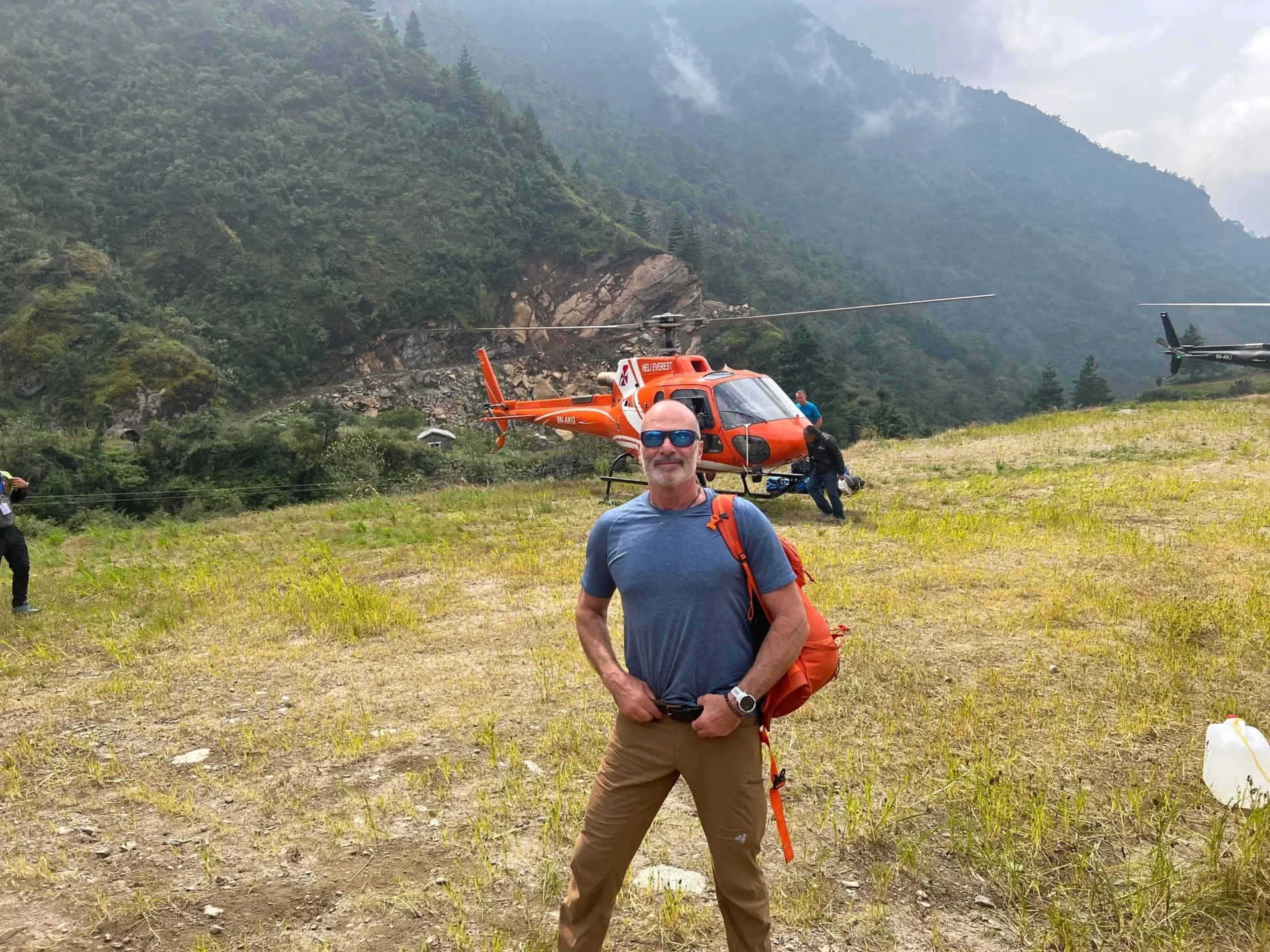
So we landed on a helipad in Surke, altitude 2,309 m. When we landed there, it felt like a refugee camp. Multiple helicopters were swarming around us.
We encountered a mass of people who had been stuck there for many days due to the weather. We had a hard time getting off the helicopter because people stormed it. It was first-come, first-served to get on the helicopter. I encountered a couple from Israel who were desperate to go back in view of the recent events—it was a lady who came from one of the villages that was stormed by Hamas, and her kids were at home when the terrorists broke in, but they miraculously survived after the Israeli military saved them. We also encountered a young Mexican woman who had been stuck there for a few days—she had to be flown down from one of the high-altitude villages due to spitting blood and suffering from high-altitude pulmonary edema (water in the lungs).
Our trek began. We were in the Solo-Khumbu area. To be specific, we were in Khumbu, which starts around Lukla, the Land of the Sherpa. It was actually humid. The first stop was in Phakding, 2,800 m. From there, we went to Namche Bazar, 3,440 m. The trail was packed with trekkers. After all, the trek to Everest Base Camp is the largest non-religious pilgrimage in the world. We crossed numerous suspension bridges and encountered lots of animals carrying goods.
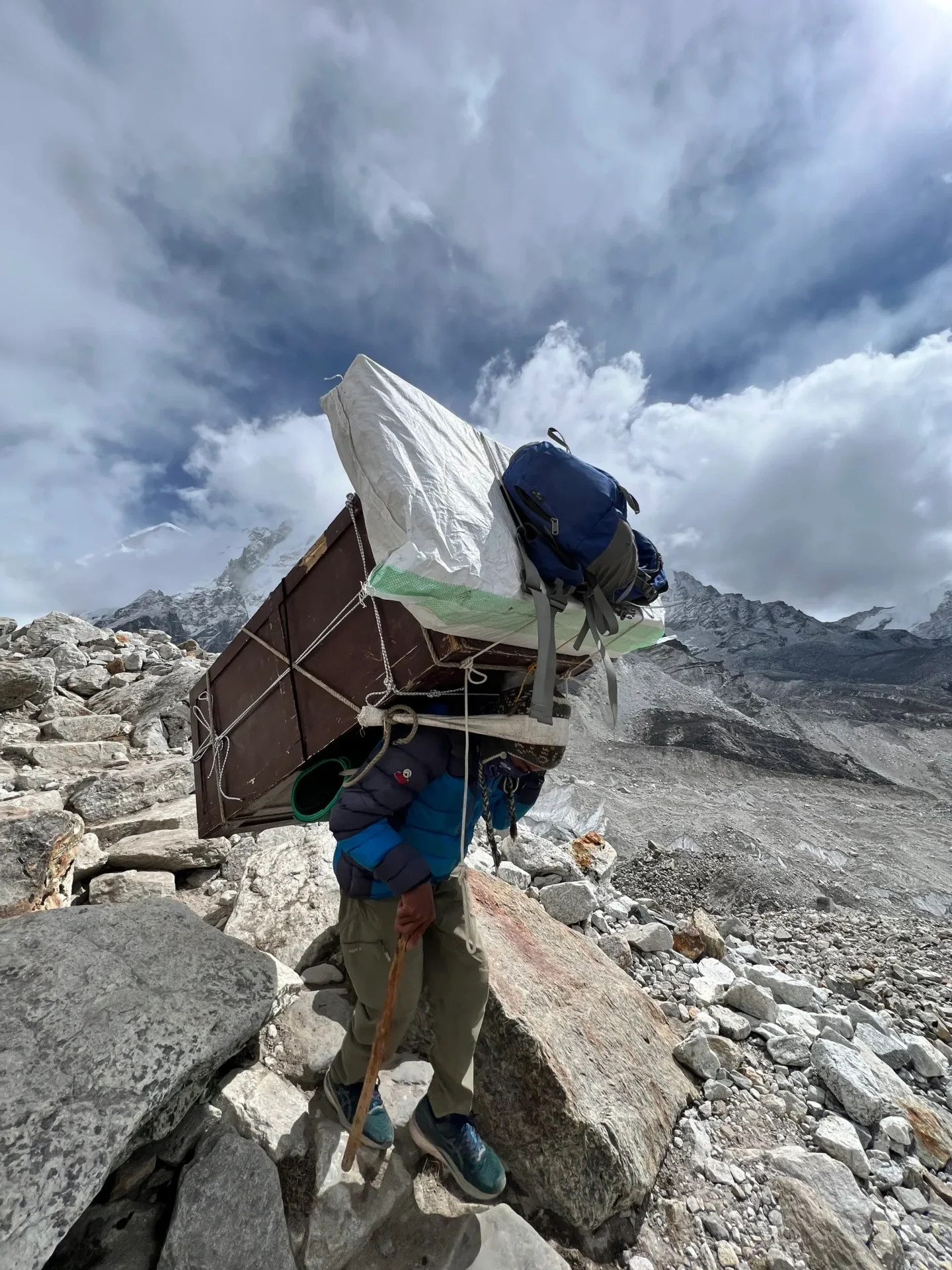
There are no roads—so all is carried on the back of mules at the lower altitudes, and yaks and cow-yak hybrids at the higher altitudes. There is lots and lots of manure on the trail, so one has to be careful not to step on it. People also carry goods on their backs. Men and women carry incredibly large and heavy weights. It’s really hard to believe when you see them. I saw our porters carrying our stuff—one guy would carry 3(!) duffel bags, roughly 70 kg.
The trail is mostly cut on the side of the mountain, with a cliff on one side and a major drop on the other. We were advised to stick to the cliff side when a yak is walking by, because inadvertently people might be pushed by the animal. There were cases of people on the drop-off side who fell to their deaths. We crossed different microclimates and ecosystems along the way.
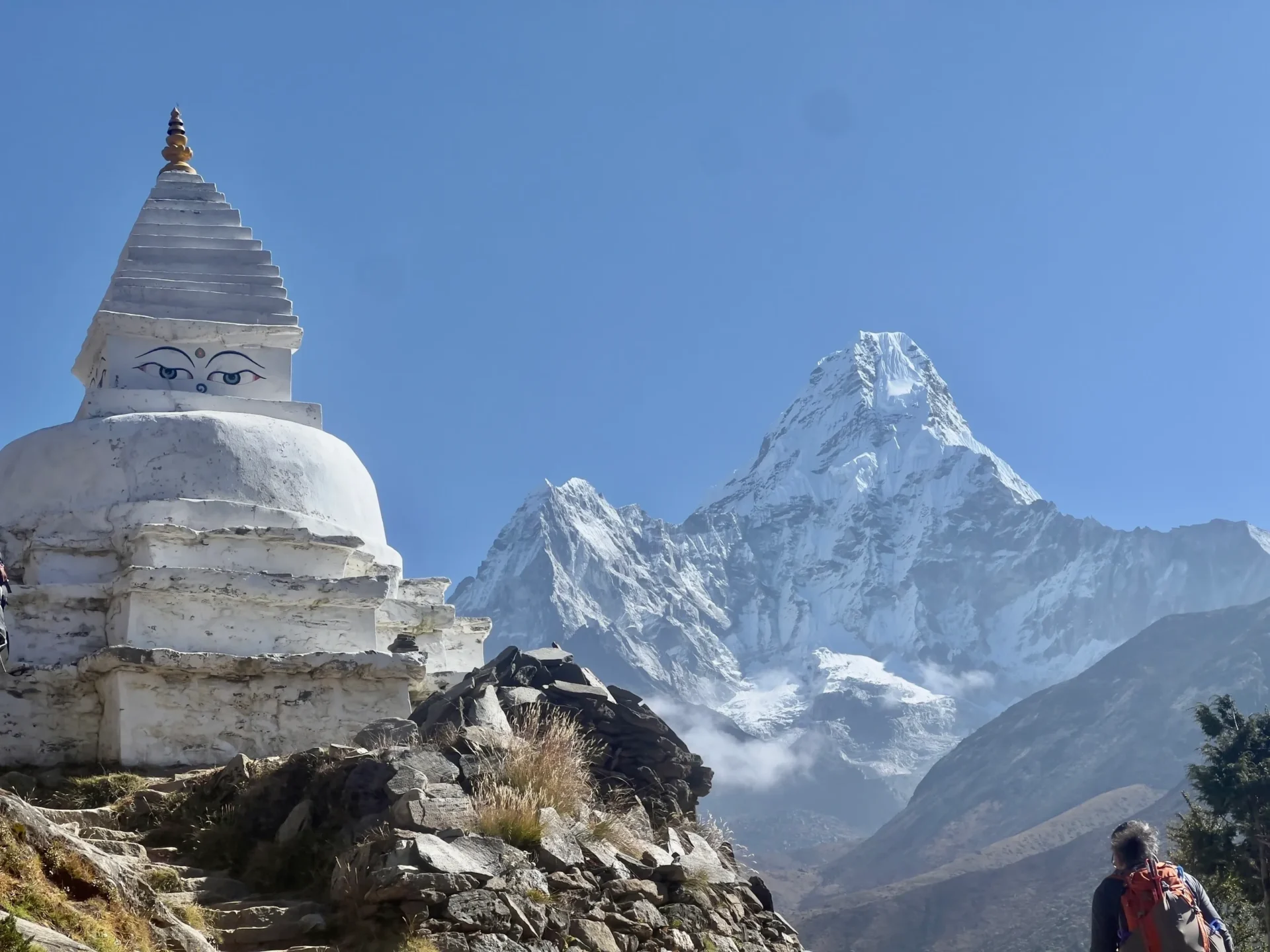
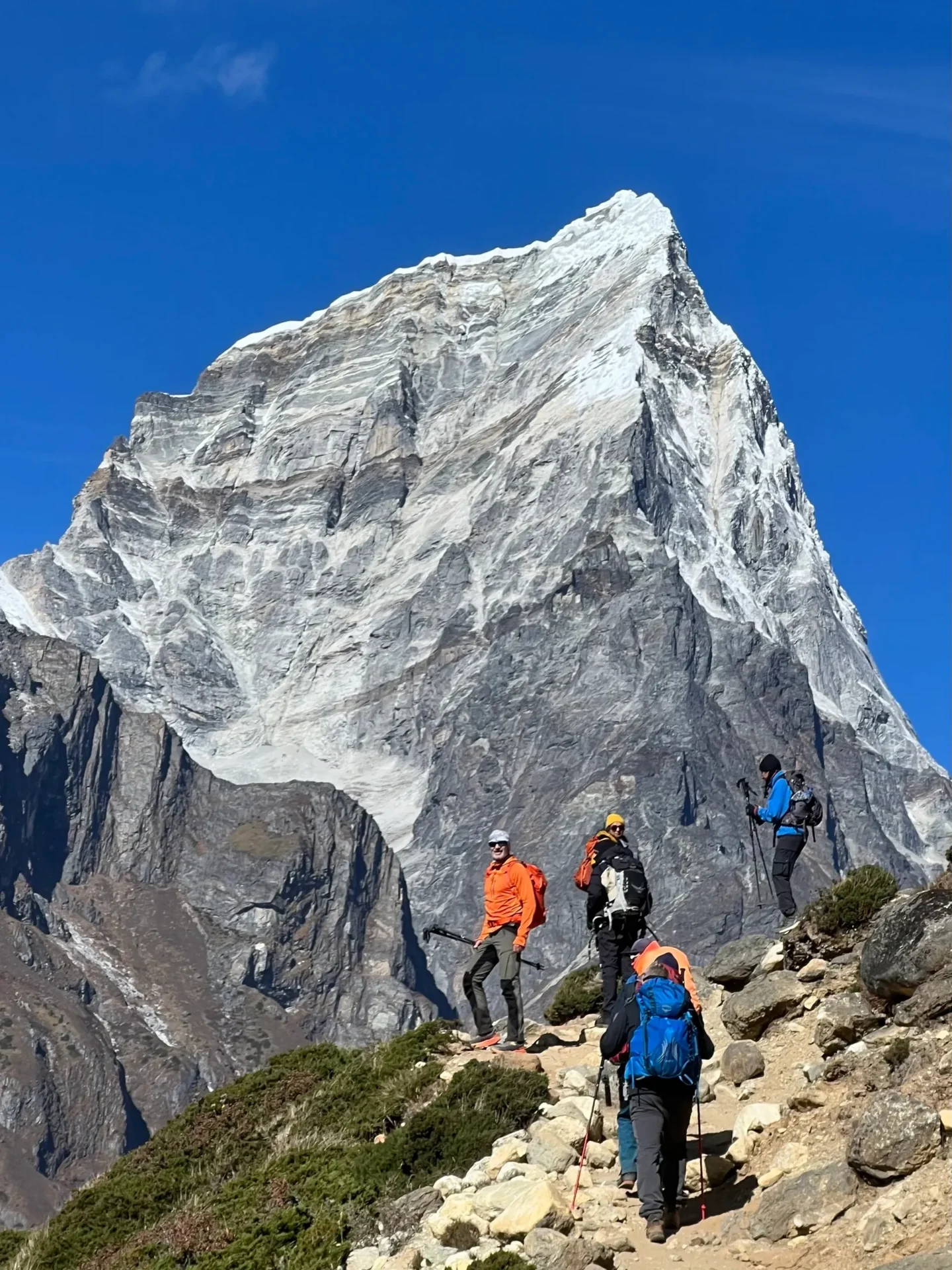
We spent one day there to acclimatize and hiked to the “Hotel Everest View,” 3,880 m. It’s actually a unique luxury hotel. We were only allowed to go to the terrace, which has expansive views of Everest and some of the other 8,000 m peaks, as well as Ama Dablam, a mountain considered to be the most beautiful in Nepal and the third most climbed. On the way down, we stopped at a new facility that had just recently opened, “Sagarmatha Next.†It’s a recycling facility and has an innovative way to clean all the trash left on the trail. It also had an amazing virtual reality short movie about Everest.
That night, I brought to dinner my bottle of Jim Beam bourbon—the Sherpas and porters wanted a shot as soon as they saw it, so there and then the bottle was finished.
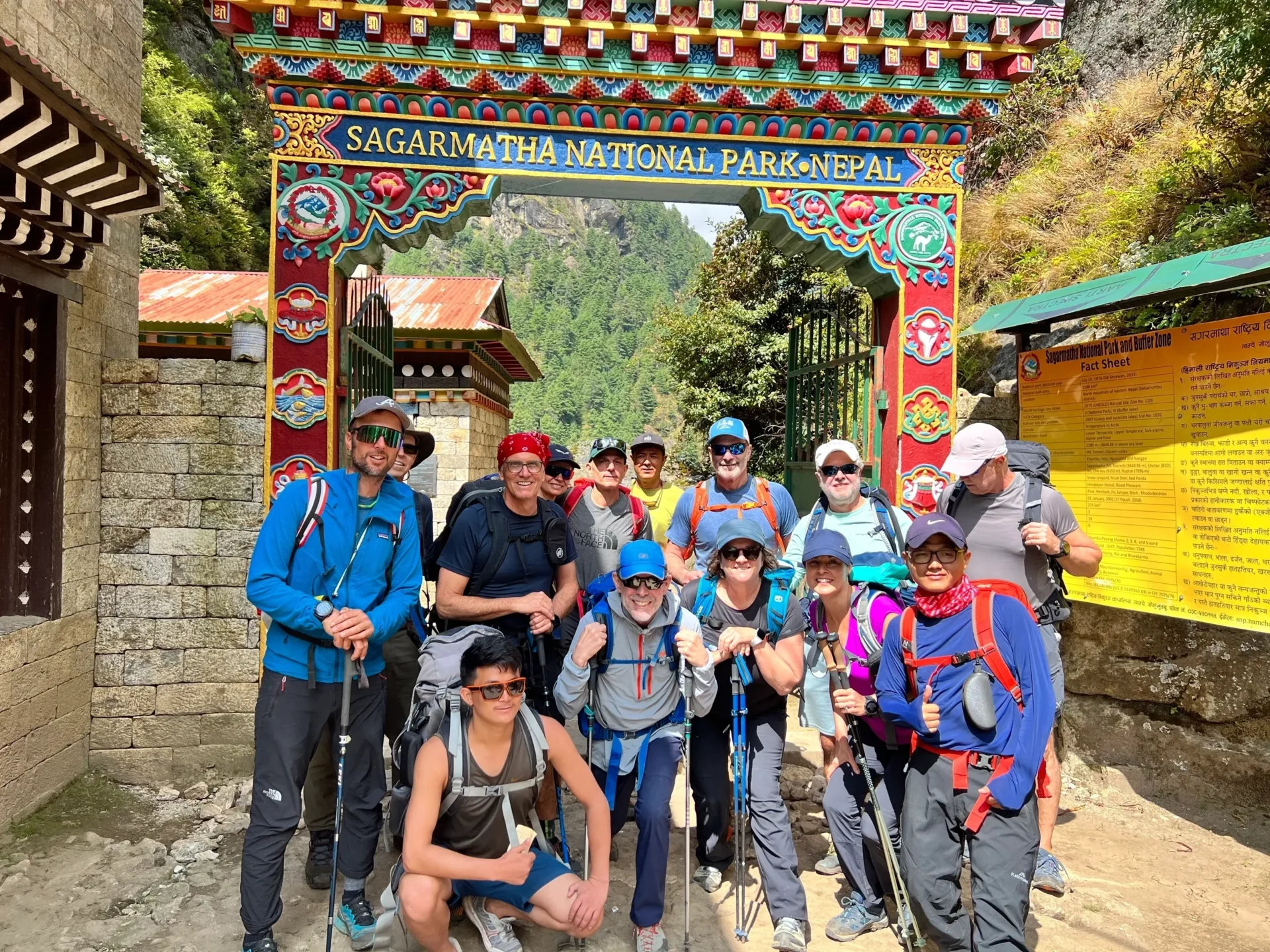
Sagarmatha (“Goddess of the Skyâ€) is the name of Everest in the Sherpa language. In Tibetan, it is Qomolangma (“Holy Mother”). The current name is after Sir George Everest, who was the British Surveyor General of India in the mid-1800s. Most of the trek was within the Sagarmatha National Park.
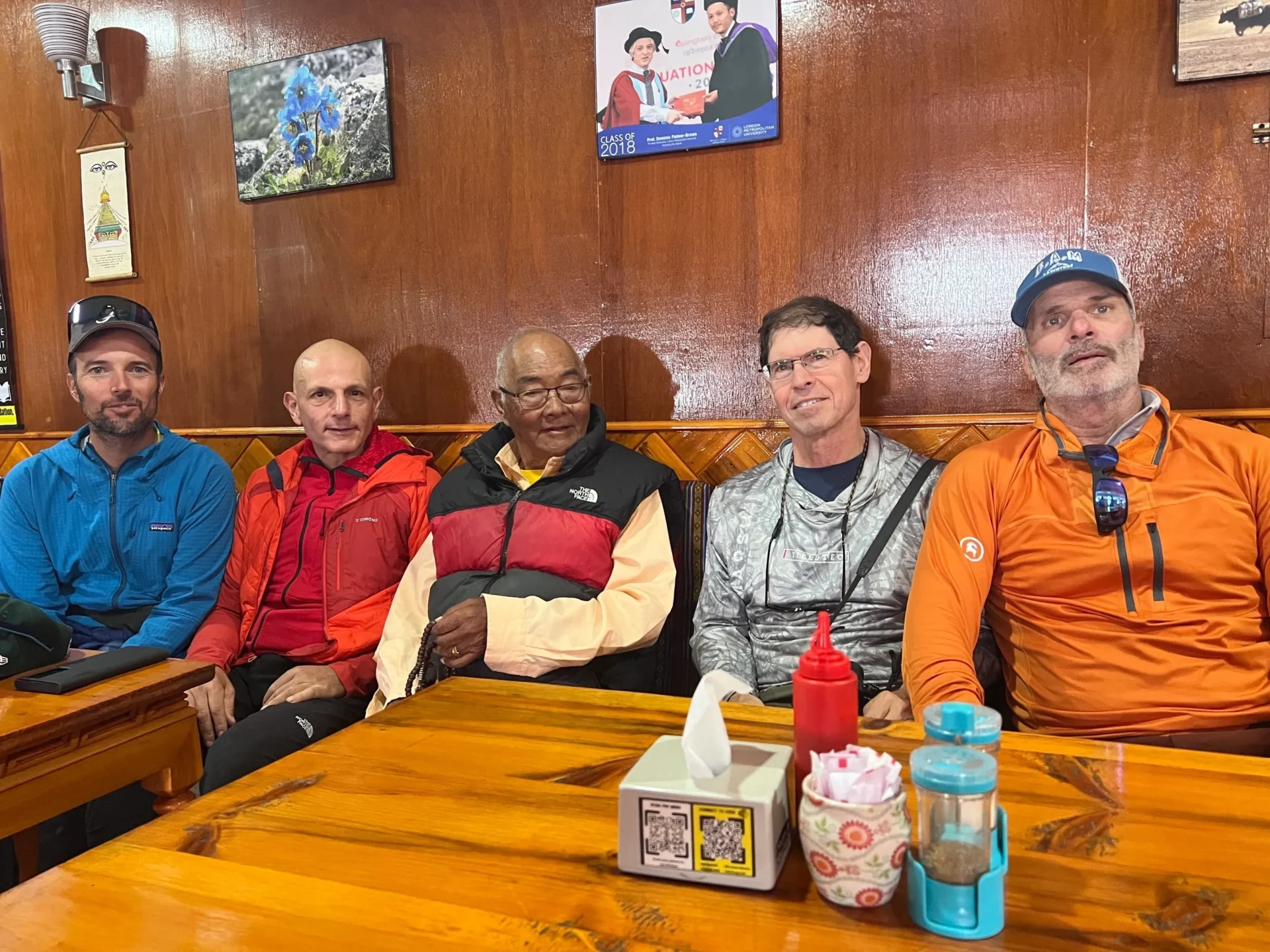
In the same town, we got to meet and visit with Gancha Sherpa at his house—the only surviving member of the original Everest Expedition in 1953 led by Sir Edmund Hillary. He is 92 years old. It was one of the highlights of the trip.
The trek continued, and we gained altitude day by day. However, it was not straight up, but rather up and down and up again, always along a multitude of people, lots of them having no business being there (not in shape).
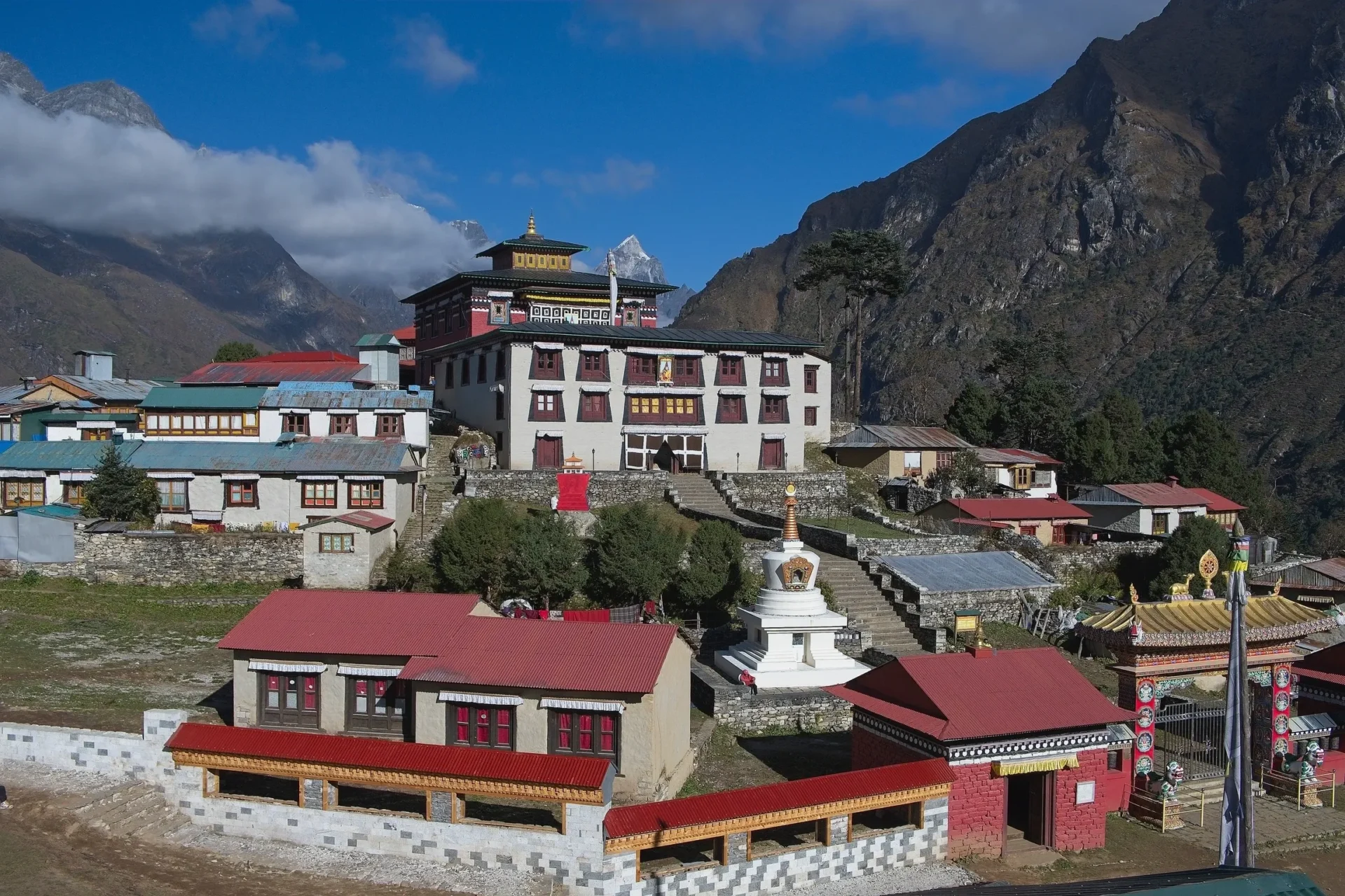
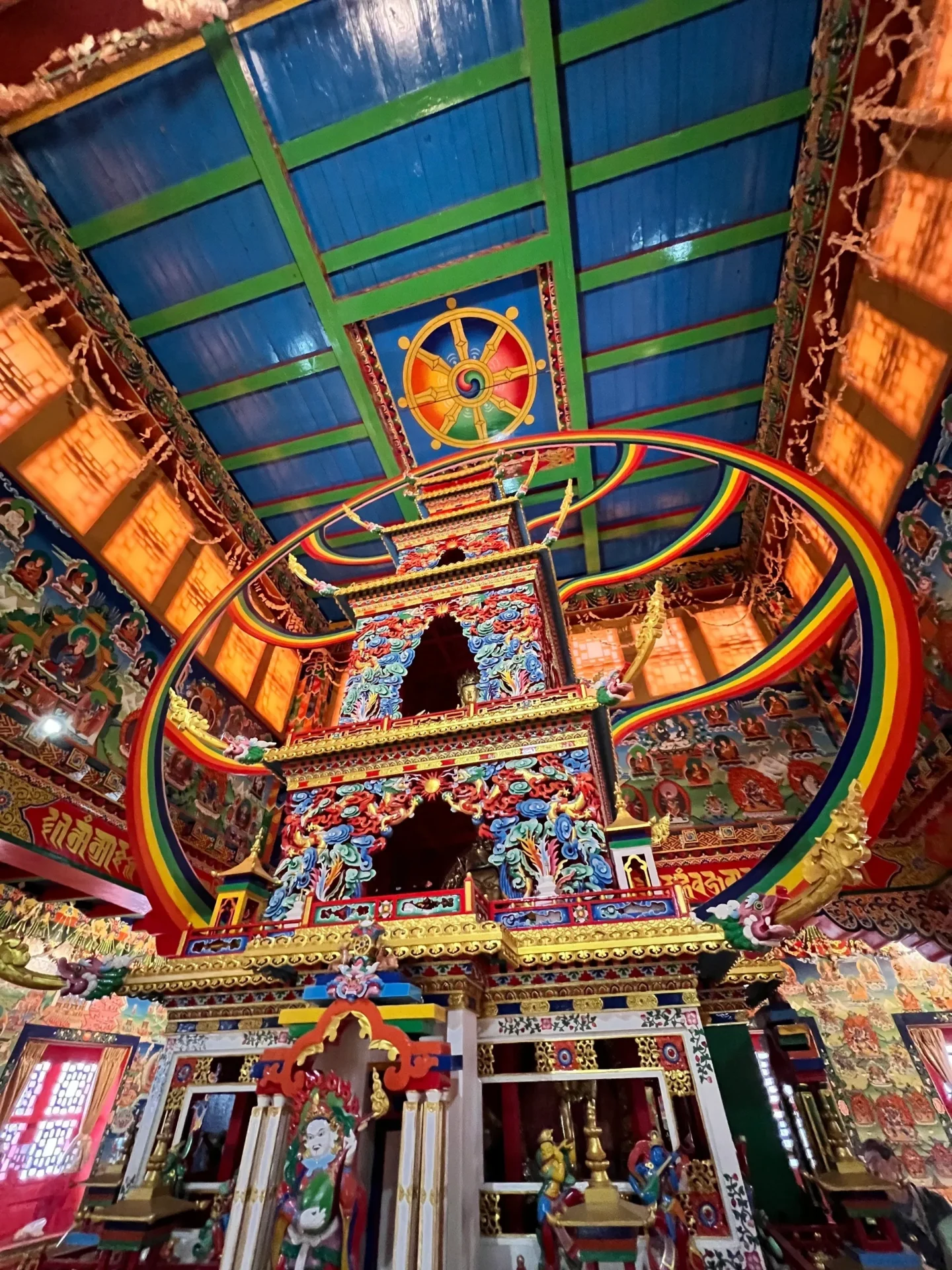
We stopped for the night at Thyangboche, 3,867 m, where there is a Buddhist monastery. Our Sherpa took the group inside, and he bought from the monk charms for all of us on a red string, which we wore around our necks for the rest of the trek. We were there during the service, and I had an incredible experience meditating.
Not sure if it was the chanting, the atmosphere, the prana, or all of them—but I felt that I could see my “third eye,†the location of “knowledge.†Another one of the trip highlights.
We continued from there, all along with great views of the snowy peaks, especially Ama Dablam, to the tiny village of Pangboche, where there is an ancient monastery. They claim to have inside a skull of a yeti (supposedly). However, it was closed that day and we could not get in.
The night was spent in Dingboche, 4,410 m, right in front of the aforementioned Ama Dablam. The higher we went, the colder it got. It’s very cold at night because there is no heating, and the houses have no insulation.
I wore all my clothes—puffy jacket, hat—and still would shiver for 15 minutes once in my sleeping bag (made for 15°F!). From there, we continued to Thula Pass at 4,830 m, where there are memorials to many of the climbers who died on Everest and on those mountains in general.
We passed many stupas, all with drawings of the eyes, nose, and mouth of Buddha. Lots of colored prayer flags, and many rocks painted with prayers. Our Sherpa carried a little speaker, playing music incessantly. It was a mix of contemporary pop/rock along with the mantra “Om mani padme hum,†which is Sanskrit for “Praise to the jewel in the lotus.†This mantra was also written on rocks, prayer flags, and numerous prayer wheels seen everywhere. Buddhists believe it invokes loving-kindness and compassion.
By the way, when passing a stupa or a rock with painted prayers, one always has to walk clockwise. We also passed numerous colorful prayer wheels that one needs to turn clockwise. They help eliminate bad karma.
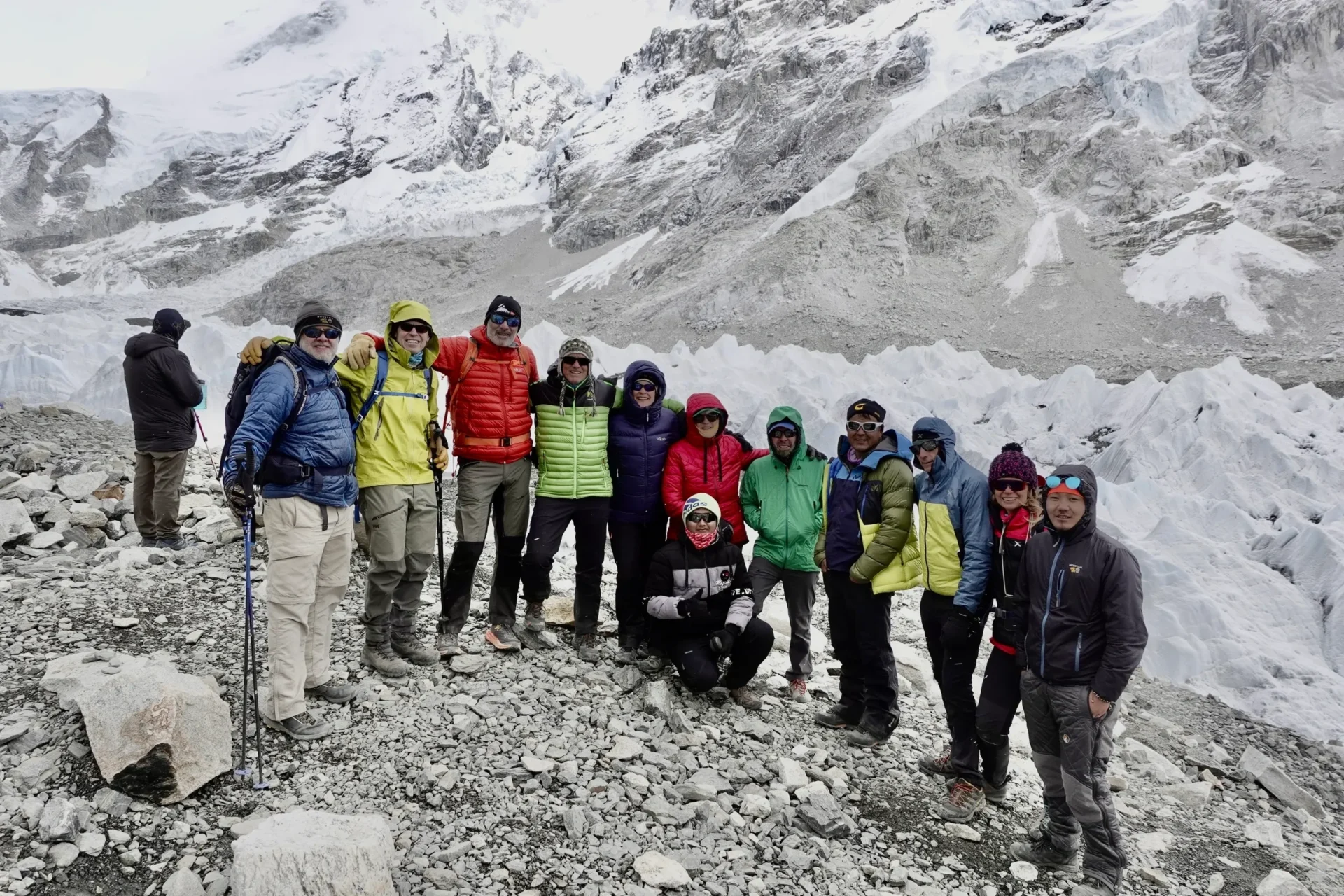
The night was spent at Lobuche village, 4,910 m. From there, the next day we went to Everest Base Camp, 5,364 m. It was not the climbing season, so there were no tents or any evidence of a base camp—only a big rock where “Base Camp†and the altitude were scribbled in red. It was exciting and exhilarating, yet anticlimactic at the same time.
We could see the Khumbu Icefall glacier with its huge crevasses—it’s the most dangerous part of climbing Everest. We could practically see Tibet and China next to it. We saw very large mountains—8,000 m—but Everest proper was not visible from there. Yet another trip highlight.
We came down and spent the night at Gorakshep, 5,164 m. In the morning, Jay, Bob, Kathryn, and Marci took the heli back to Lukla.
From there, Albi, Giovanni, Laura, and I woke up at 5 a.m. the next morning and climbed to Kala Patthar (Black Rock) at 5,643 m (18,514 ft). On its summit, there were prayer flags and great views of Everest, Lhotse (8,516 m), and Nuptse (7,861 m). Being closer, Nuptse seemed really impressive. This was the highest altitude that I reached on this trip. Tangse unfurled a prayer flag that he carried and placed it on the summit.
Pumori, 7,161 m, was in front of us and appeared so close that one could touch it. It’s an impressive and beautiful mountain.
The summit is located on a ridge leading to Mt. Pumori, a 7,000-plus peak on the border with China. The avalanche that claimed many lives at Everest Base Camp in 2015 started from Pumori. I think this was the main highlight of my trip.
From there, we went down to Gorakshep for lunch and continued to Lobuche, where we spent the night. Giovanni injured his knee, and I walked slower alongside him. The itinerary of my trip included a climb to the Lobuche summit, 6,000 m-plus; however, for the last three days of my trek, I had a nagging headache.
Interestingly, cardio vascular wise I felt amazing and felt that the altitude did not bother my performance .In fact I felt that I can walk quite fast -both up and down the mountain. Also surprisingly I had zero physical complaints -no aches , pains , tenderness or tight muscles, which really is unusal .
So back to the headache – I thought that it may be a different manifestation of the altitude , and wanted to delay the climb by one day. We had extra days built in the itinerary .However I was informed that is not possible, so out of an abundance of caution I decided not to climb. But in retrospect I think it was just a mild virus, because the head sherpa shared a room with me and he too had a headache , and he canceled his climb…
By the way, all the Canadians were coughing really bad, one of them had a fever, and they had stomach problems .Michele had altitude sickness and upon his return to Italy tested positive for Covid , and Albi had a virus and altitude sickness .Jay had symptoms of more severe acute mountain sickness , and took Decadron. Laura had zero issues.
Albi, Michele, Graham and Steve and Laura went on to climb Lobuche. Steve, Laura and Albi summited .The other 2 were sick with fever and stayed in the tent.
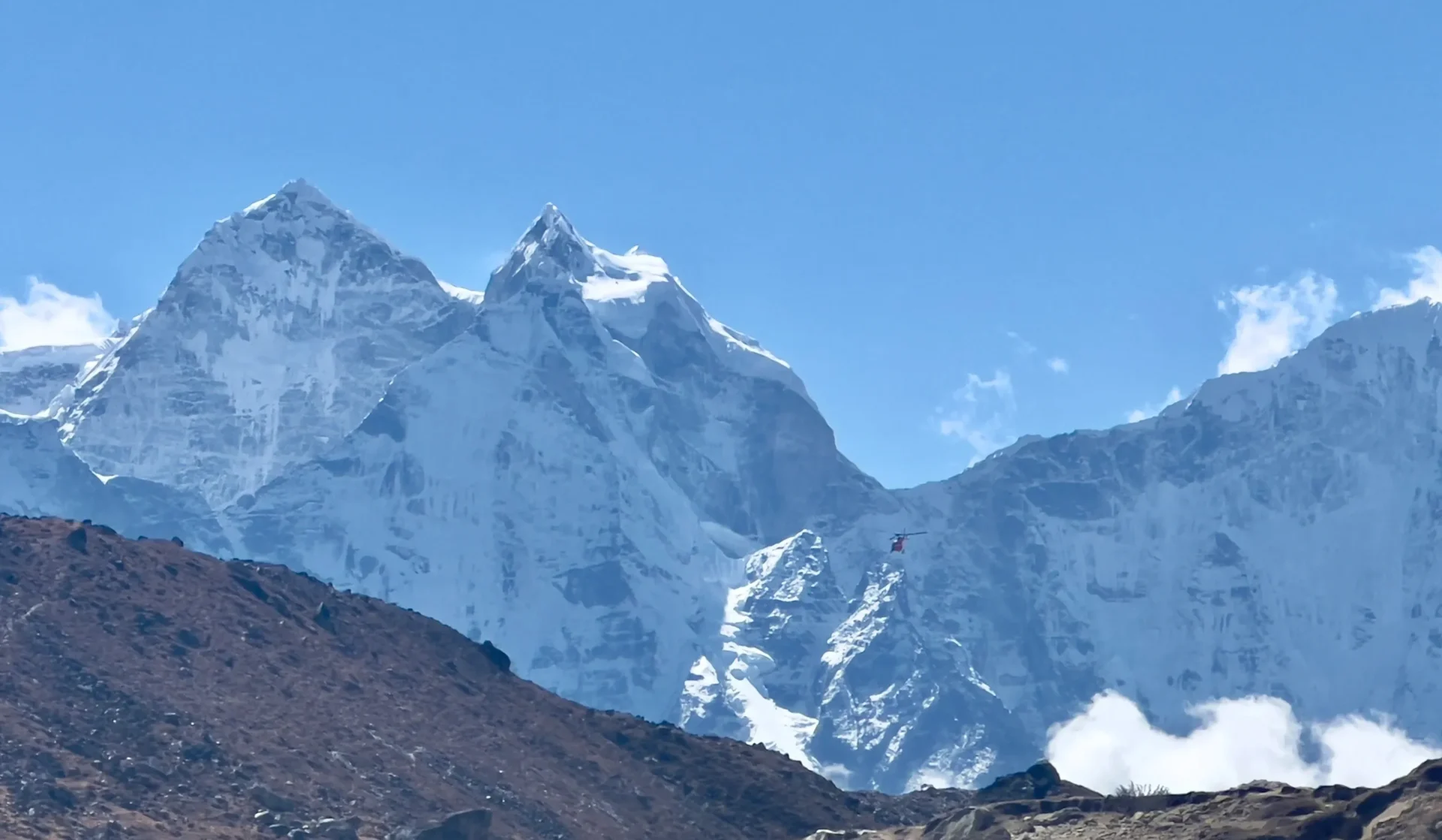
So I went back to Lukla, by Helicopter .At that altitude the Helicopter can take only 2 people , because it can’t get a lift otherwise. I have to admit that I was little anxious, having seen the charred remains of another helicopter in the same area -It crashed 2 days before , but no fatalities. The pilot was by himself .He survived, after jumping before the crash and suffered injuries.
Lukla airport is considered the most dangerous in the world. It has a short runway that ends with a huge drop-off, so when a plane takes off, it doesn’t go up but actually drops off the cliff. Anyhow, we ran into another mess there, so after waiting many hours, we had to spend the night in Lukla in a place that was not, to say the least, the nicest.
However, it was authentic, and I was impressed by the little kid (the owner’s son) who spoke good English and calculated whatever we had to pay.
Luckily, the weather was good the next morning, and we were able to fly by helicopter to Kathmandu. Nepal has lots of airplane crashes, lots of car accidents, and lots of helicopter crashes. There were some a few months before our trip. They say that in Nepal, the safest way to travel is by foot.
Also, they say that in Nepal, a helicopter should not fly through the clouds because they have rocks in them (i.e., mountains). Yet we flew over thick clouds. Miraculously, the clouds disappeared above Kathmandu, and we landed safely.
We spent a few hours at the A-Loft Hotel—a new building that seemed to me like a seven-star place. I really, really appreciated the hot shower, Western-type food, and even an Aperol Spritz! I changed my flight to an earlier one, and at 11 p.m., I was on my way to the airport.
It took 31 hours for the door-to-door trip. A week after I came back, there was an earthquake, but not quite in the area that I had been.
Albi stayed a week longer to climb Ama Dablam .The plan was to do it with Michele, who however got sick . Albi summited it along with a new young sherpa ( Sangay was sick , with headache..)
Glad that I came home in one piece